Submerge Power — Floating Solar Energy Generation and Pumped Hydro Storage in one

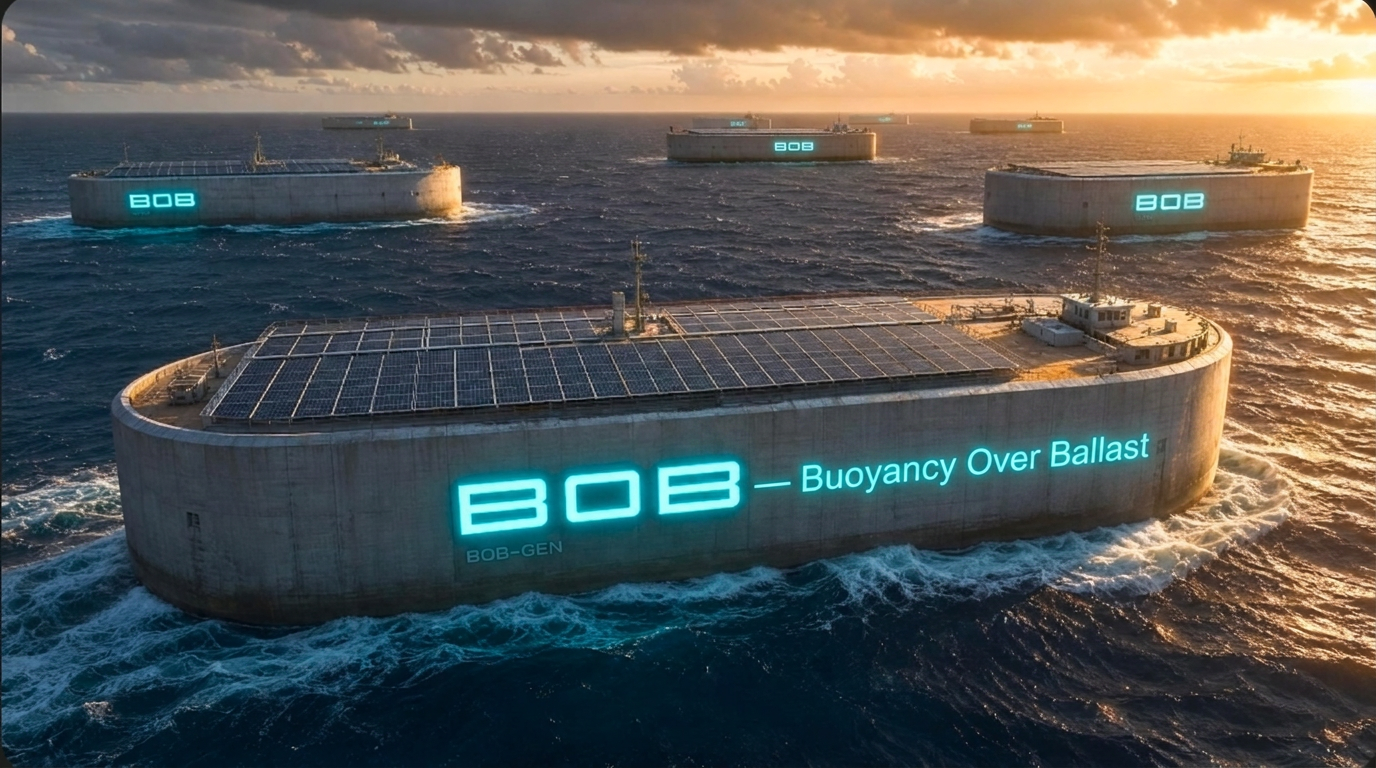
BOB-GEN fleet of concrete floating solar and pumped hydro storage vessels at sea at sunset
66%+
RTE Pass Threshold
20 m
Prototype Diameter
11.0×
T1 Investor MOIC
$1 M
Total Ask

The Technology

How BOB works

10 5 0
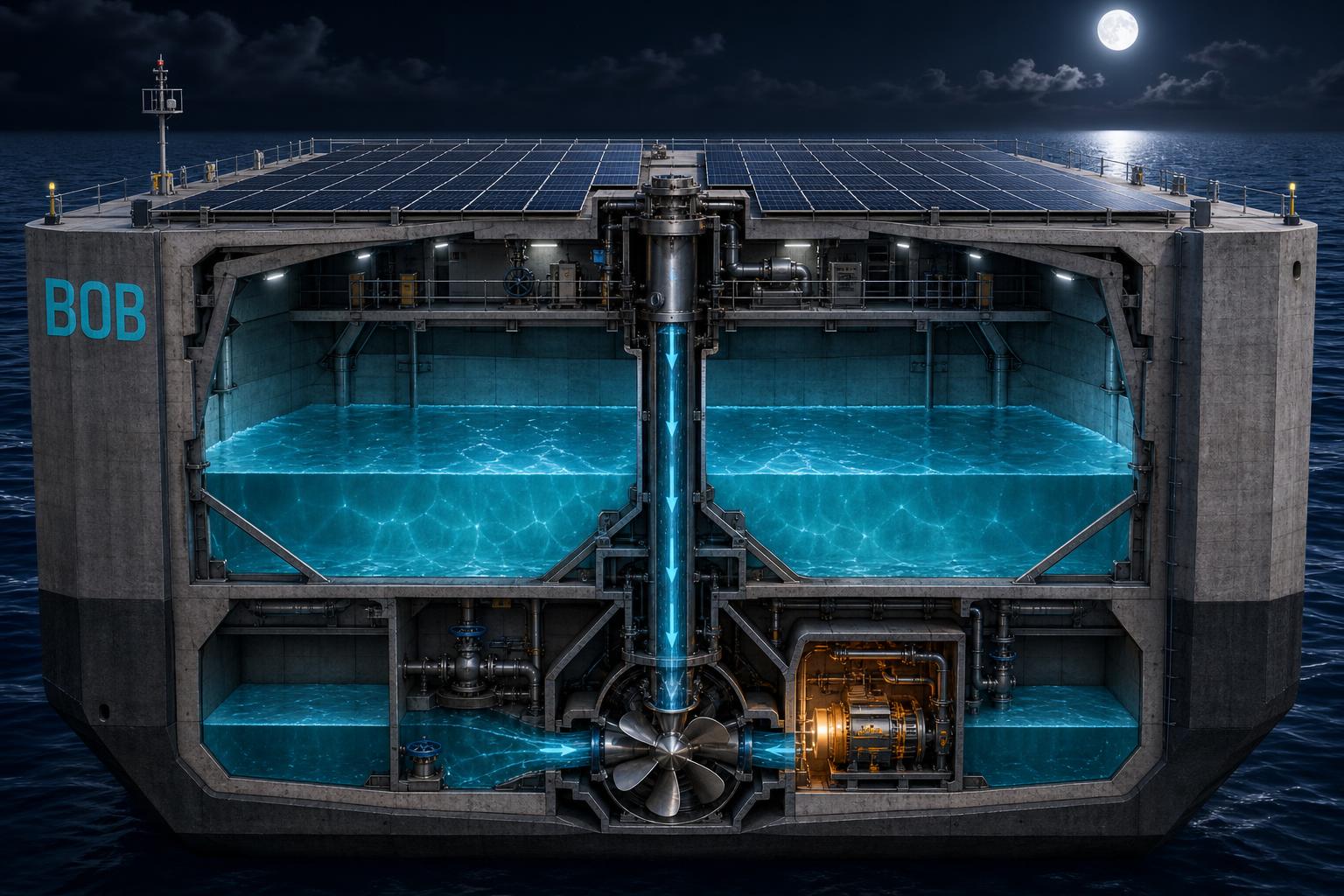
↓ Sink phase: Ballast tanks fill. Water flows through Kaplan turbines → electricity is generated.
↑ Float phase: Water is pumped from the ballast tanks, vessel becomes positively buoyant and as it rises water flows through the turbines in reverse and generates power a second time.

BOB · BUOYANCY GENERATOR CYCLE

Female voiceover · animation plays with narration
BOB-GEN cutaway showing the main ballast tank, lower ballast tank, central penstock and bottom Kaplan turbine with generator

Cutaway view: main ballast tank, lower tank, central penstock and bottom Kaplan turbine with generator.

  • BOB-GEN (Buoyancy Over Ballast Generation) is a concrete floating vessel that serves as both an energy generation and PHS (Pumped Hydro Storage) system.
  • The deck serves as the mounting platform for large industrial solar arrays, while the hull acts as the PHS vessel.
  • The sun generates power during the day, which is then sent to the grid for consumption.
  • A small percentage of the solar energy is diverted to "priming" the water battery.
  • When solar output diminishes as night approaches, the vessel switches over to its stored water energy and cycles between its sinking and floating phases.
  • BOB thus has the potential to provide 24/7 energy generation almost anywhere there is water.

Works in any body of water with sufficient depth. Independent of wind, wave or tidal conditions. Near-zero cradle-to-cradle environmental impact. No rare metals, non-explosive, non-combustible.

Locked Baseline

Configuration
Top-discharge pump system
Prototype size
20 m diameter · 10–15 m draft
Turbine
Kaplan
Pass / Fail
≥ 66 % measured RTE

Projected 8-12 hour round-trip energy generation cycling through buoyancy and ballast stages.
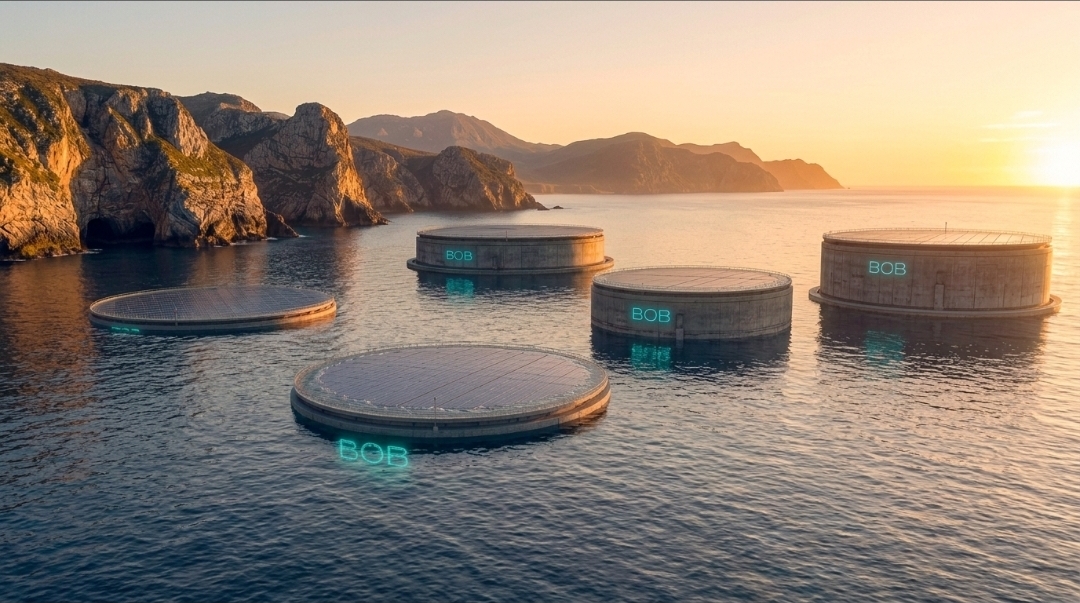
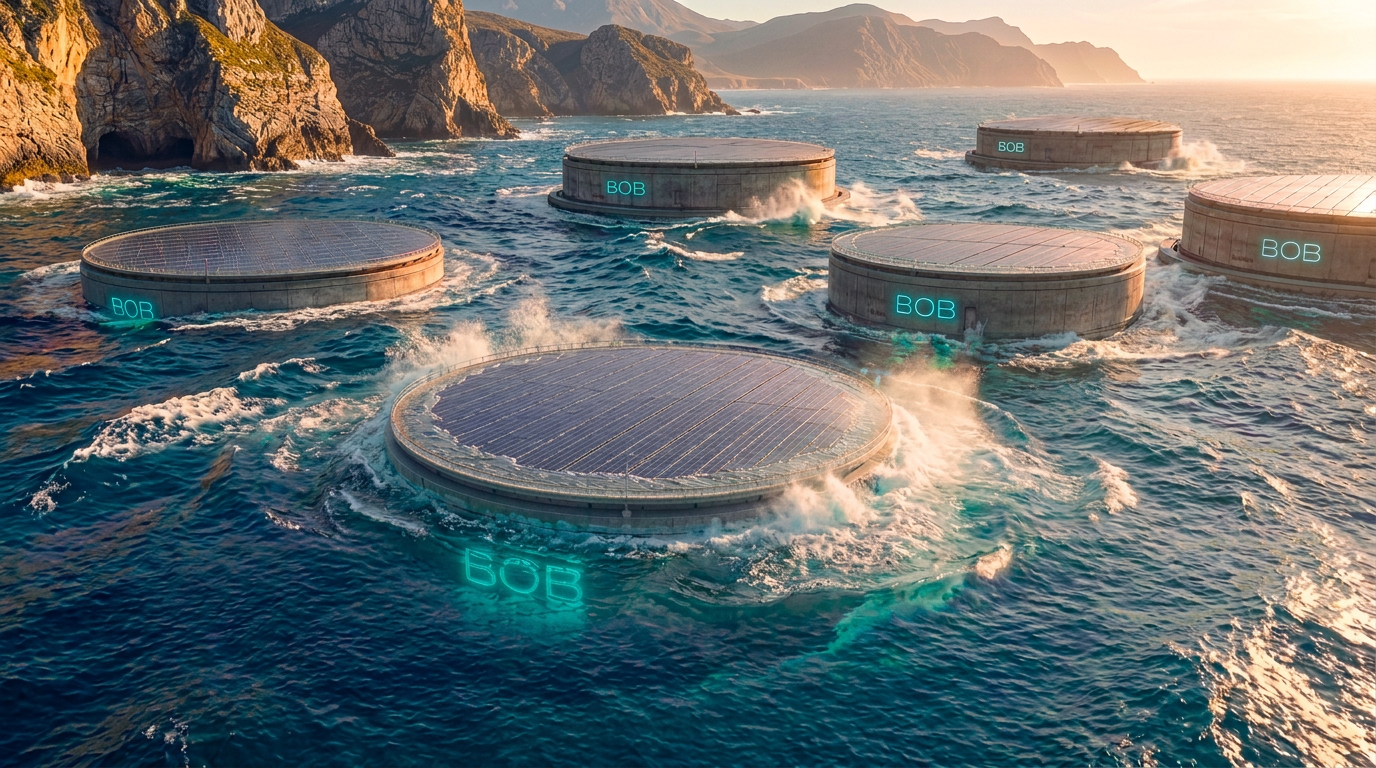
Circular BOB-GEN vessels floating in a coastal bay at sunset with glowing cyan BOB hull lettering
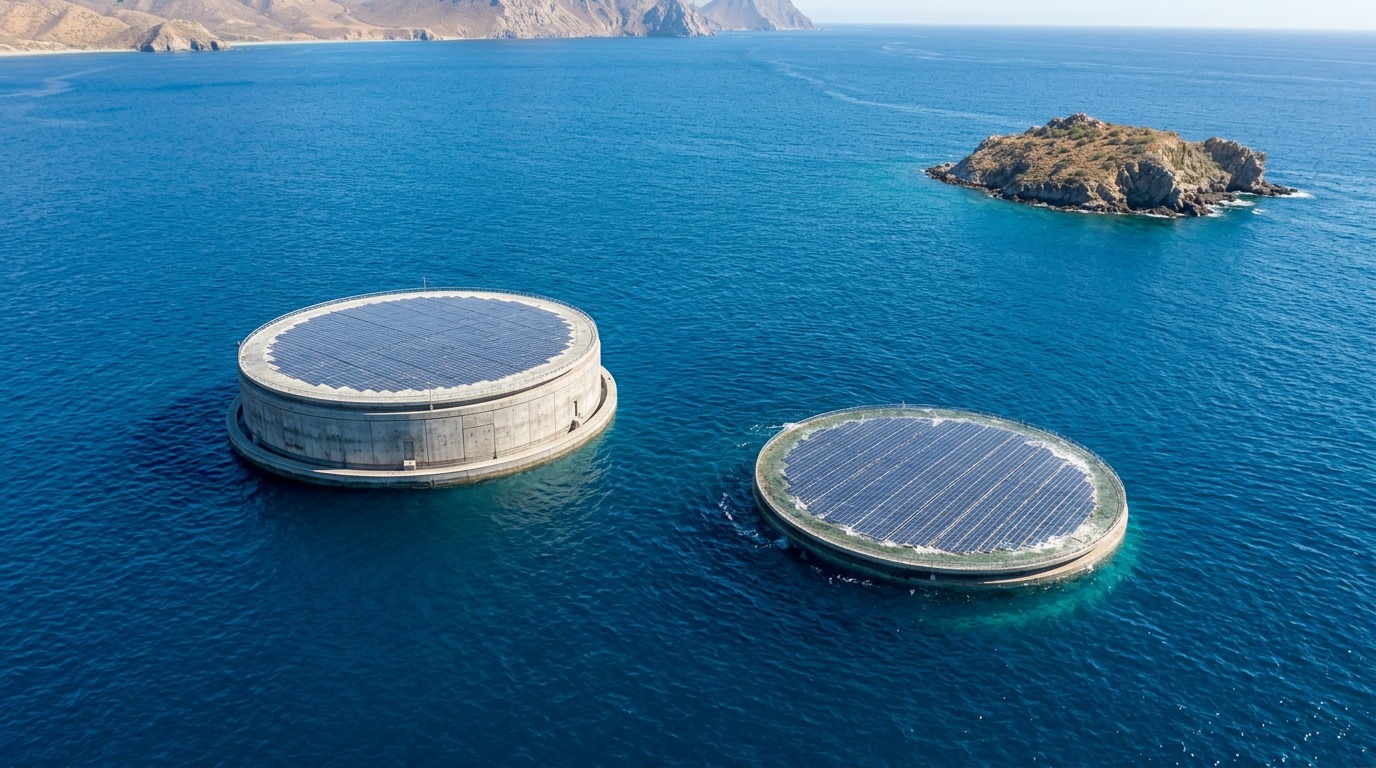
Aerial view of two circular BOB-GEN solar vessels in deep blue offshore water beside a rocky island

Independent Validation

Two Engineering Reports Confirm the Physics

FGMi · Chile · 2021

Felipe Guerrero M. — Port & Coastal Engineering

Independent desktop concept review using first-principles physics (buoyancy, hydrostatic pressure, orifice flow). Confirmed the sink/float mechanism is physically valid. Recommended optimisation before prototype — which was later performed by Qfinsoft.

  • • Three geometries modelled (P1–P3)
  • • Net energy balance close to zero under conservative assumptions
  • • Suggested top-discharge ballast modification
Qfinsoft · South Africa · 2025

Dr Evan Smuts — Ansys Twin Builder Digital Twin

Full system-level simulation across seven design variants (C1–C7). Key breakthrough: top-discharge ballast emptying reduces energy input by 47 % versus original design, raising modelled round-trip efficiency to as high as 68.9 %.
  • • Best design (C3): 68.9 % combined-phase RTE
  • • Low-pressure blower replaces high-pressure compressor
  • • Directly informs the locked 20 m prototype baseline
IP Status: Patent 2024/00585 registered (South Africa — energy storage). Patent 2025/08315 provisionally filed internationally (generation). IP vested in Trust structures.
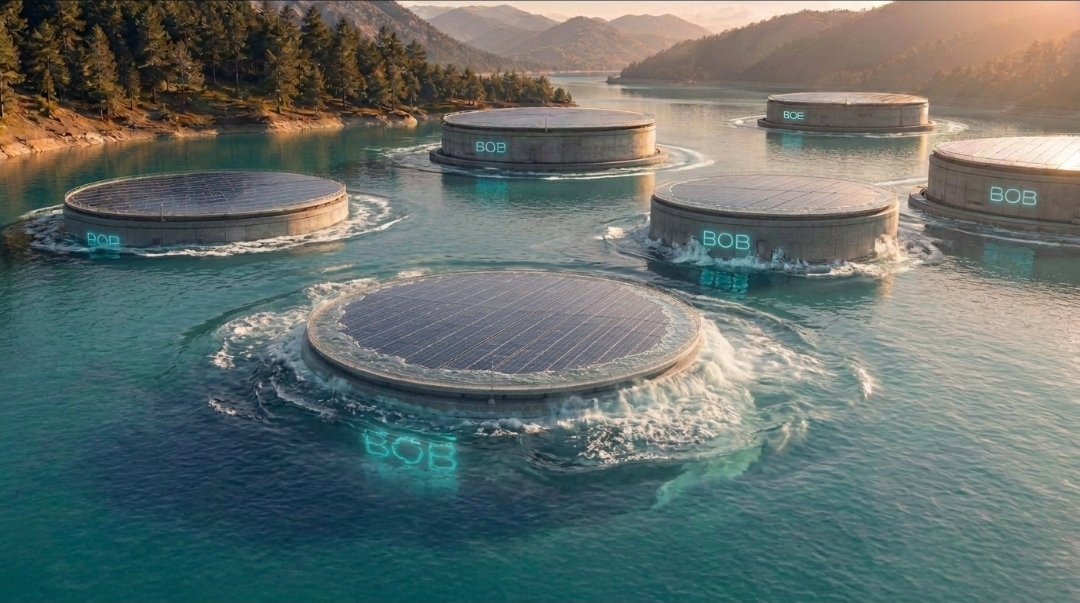
Aerial view of a BOB-GEN array on an inland lake, vessels at different stages of the sink and float cycle

Lakes, dams, fjords or open sea — BOB-GEN arrays deploy on almost any body of water.

The Investment Thesis

BOB sits in a category of one.

Every other water-based renewable is either intermittent, site-locked, or unbankable. BOB-GEN combines the cheapest generation on earth with the oldest, most proven form of grid-scale storage — on a single concrete hull.

Levelised Cost of Energy — Water-Based Renewables

USD-equivalent · midpoint of published ranges
Utility solar PV
$43
Offshore wind (fixed)
$79
Floating offshore wind
$250
Tidal energy
$295
Wave energy
$455
BOB-GEN (target)
$55

Ranges: wave €160–750/MWh · tidal €110–480/MWh · floating wind €145–350/MWh · fixed offshore wind $55–170/MWh · utility PV ~$43/MWh weighted avg. Sources: IRENA Renewable Power Generation Costs 2024; EU JRC / Ocean Energy Europe; PV-Tech 2024.

Two revenue streams per vessel

Solar sales by day plus PHS arbitrage / firming revenue around the clock — from the same footprint, same mooring, same grid connection.

10×

Cheaper than wave & tidal

Wave and tidal need bespoke seabed engineering. BOB uses standardised, locally poured concrete hulls — no exotic supply chain, no site-locked geology.

100 yr

Concrete asset life

Lithium batteries degrade in 10–15 years. Concrete marine structures last a century. LCOE amortises over a far longer bankable life.

Why This Is Lucrative

A bankable LDES asset at solar-PV economics.

Long-duration energy storage is a $1.5 trillion global bottleneck — every utility on earth needs it, no one has built it cheaply. BOB-GEN is the first design that pairs the world's cheapest generator (solar) with the world's most proven storage (pumped hydro) on a single, replicable, concrete vessel. At a target LCOE of ~$55/MWh delivered 24/7, it undercuts lithium storage, undercuts every marine renewable, and matches unfirmed utility PV. A $1M commercial POC de-risks the entire category and unlocks utility-scale off-take across every coastline, lake, fjord and reservoir on the planet.

Future Applications

One platform. Multiple revenue streams.

The BOB-GEN deck is uncommitted real estate on a stable, grid-connected marine foundation. Beyond solar and pumped-hydro storage, it can host high-load infrastructure that turns each vessel into a multi-purpose energy node.

Floating Data Centres

Data centres are power-hungry and land-scarce. Placing modular compute containers on the BOB-GEN deck gives operators direct access to firm, low-cost clean power and a naturally cooled environment — without competing for grid capacity or land permits.

  • 24/7 firm power from solar + PHS reduces reliance on diesel backup.
  • Seawater and ambient marine cooling lower HVAC loads.
  • Scales from edge-compute pods to hyperscale floating farms.

Green Hydrogen

Electrolysers need cheap, steady renewable electricity and water — both are already on-site. Surplus solar and stored PHS output can run electrolysis to produce green hydrogen or ammonia for ports, shipping, and export markets.

  • Onboard desalination feedstock from the surrounding water body.
  • Stored energy arbitrage: produce H₂ when power prices peak.
  • Ideal for coastal industrial zones and green-fuel export hubs.

Desalination & Water

Reverse-osmosis units powered by the vessel's own solar and stored energy can deliver fresh water to coastal communities and islands without stressing onshore grids or real estate.

Off-Grid & Island Microgrids

Remote islands, coastal mines, and aquaculture operations can replace diesel generators with a floating solar-plus-storage microgrid that is delivered, anchored, and commissioned in weeks.

Strategic Takeaway

BOB-GEN is not a single-product asset — it is a floating energy infrastructure platform.

The same concrete hull, mooring, grid connection and control system can be reconfigured for data centres, hydrogen production, desalination, or remote microgrids. This dramatically expands the addressable market beyond power generation and gives investors exposure to several of the fastest-growing clean-tech verticals from one standardised vessel design.

Prototype Program

What USD 1 M Buys

A 12-month, two-tranche, milestone-gated program that answers one binary question: does BOB-GEN achieve ≥ 66 % measured round-trip efficiency in open water?
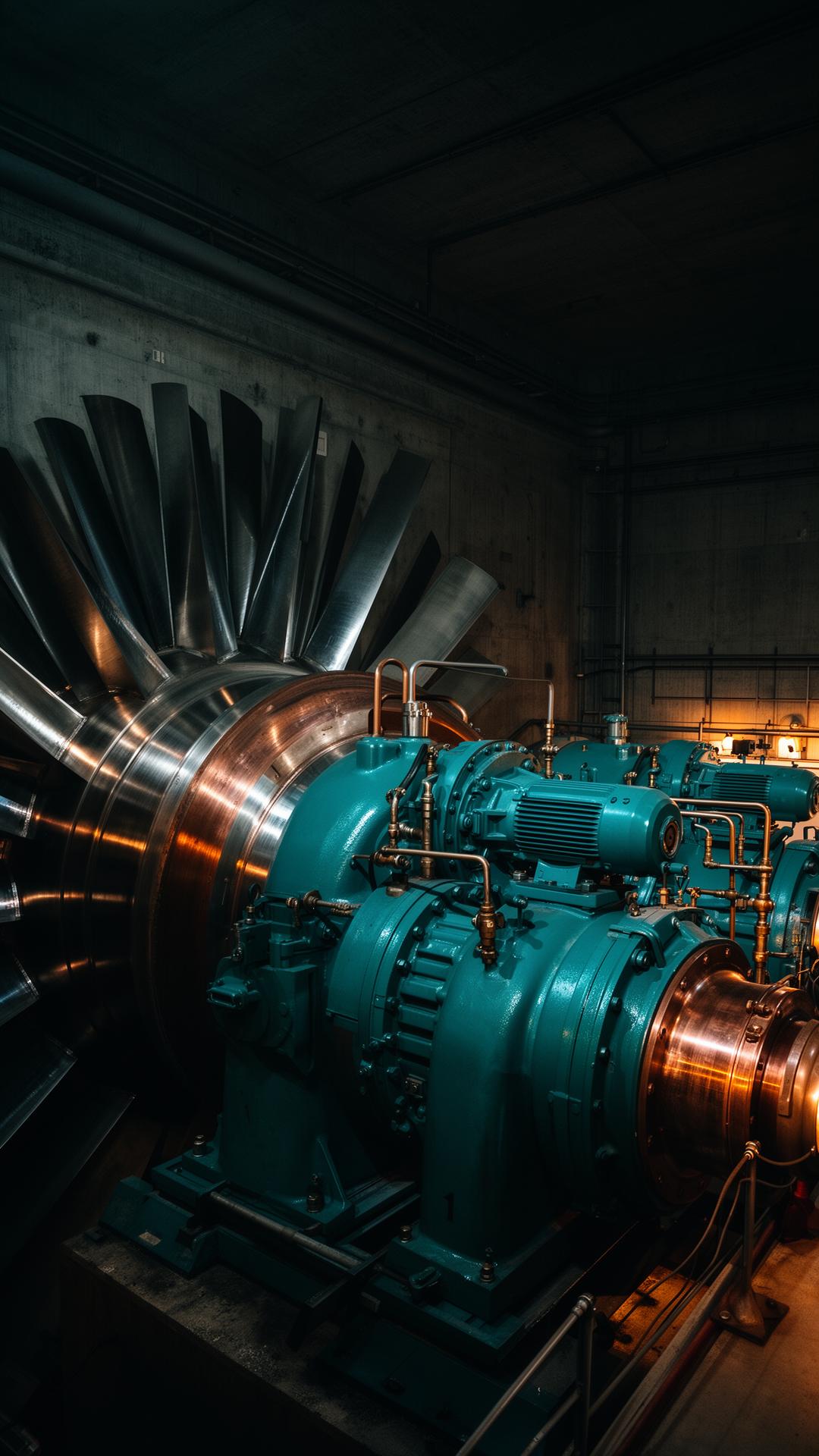
Close-up of a Kaplan turbine used for BOB-GEN energy generation

Tranche A — Design Lock

$250 k

Released at signing

  • Lock baseline design & vendor quotes
  • Written measurement/test protocol with 66 % RTE threshold
  • Site feasibility (Walvis Bay harbour preferred)
  • Independent design readiness review
  • IP heads-of-terms

Tranche B — Build & Test

$750 k

Released on Tranche A sign-off

  • Fabricate 20 m concrete prototype
  • Full end-to-end energy instrumentation
  • Deploy (harbour tie-up preferred)
  • Execute ≥ 5 consecutive full cycles
  • Independent verification of results

What the Investor Receives

A complete Prototype Results Pack containing:

Independently verified energy-in vs energy-out
Cycle time, reliability & safety data
Quote-driven cost baseline
Go / No-Go recommendation

Timeline: approximately 4–5 months from signing to Results Pack. Investor may nominate or approve the verifying engineer.
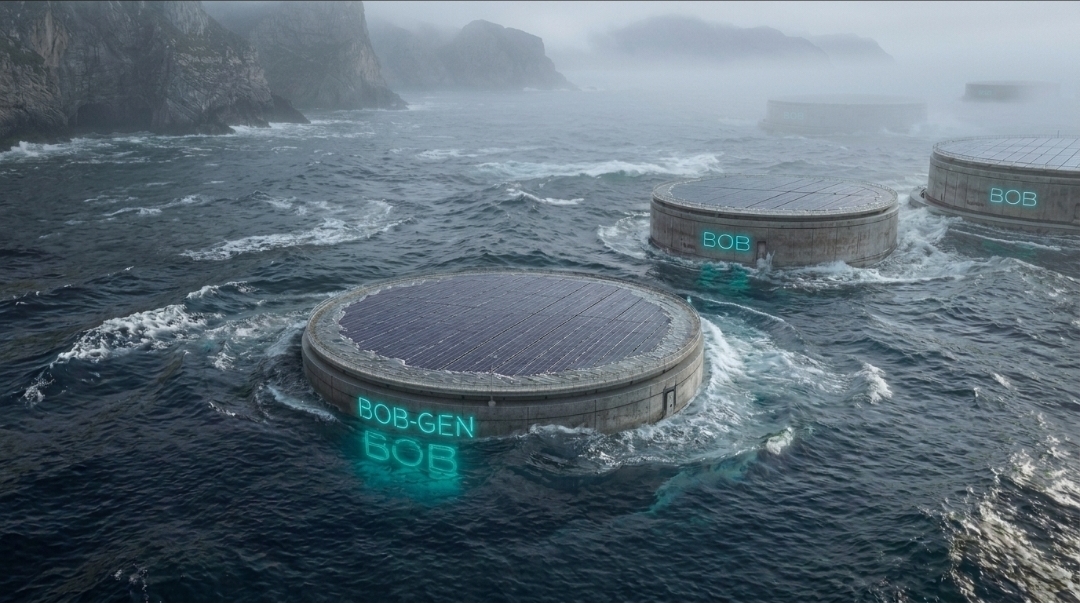
Circular BOB-GEN vessels in misty coastal waters with glowing cyan BOB-GEN hull lettering

Investment Terms

Why This Is Attractive at Tranche 1

11.0×
T1 MOIC
$1 m → ~$11 m at conversion
50.5 %
Equity IRR
Annualised vs 15 % hurdle
$7.5 m
NPV @ 15 %
Positive value creation

Indicative Term Sheet

Instrument
Convertible Note
Amount
USD 1,000,000
Conversion Discount
30 % to Tranche 2 price
Tranches
$250 k + $750 k (gated)
Kill Criteria
≥5 cycles, >66 % RTE,
≤24 h total cycle, safety
Structural Contingency
$250 k (investor approval)

What T1 Is (and Is Not) Underwriting

Underwriting only one thing: whether the technology achieves ≥ 66 % measured RTE in a controlled open-water test.

If the threshold is not met, the note does not convert and the $1 m is at risk. This is pure prototype-stage binary risk.

Not underwriting: T2 capital structure, production ramp, or contractual price escalation (the primary upside lever — estimated 50–70× MOIC if achieved).
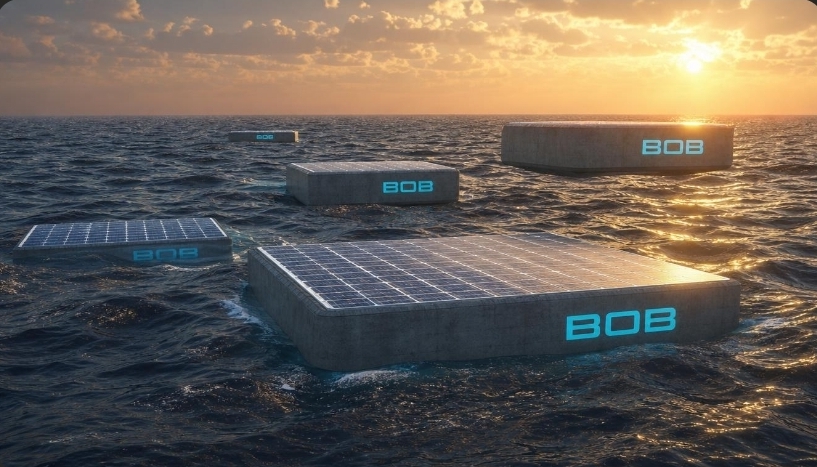
BOB-GEN vessels at sea at sunset in staggered stages of the sink and float cycle

The concrete vessels are built to withstand the harsh marine environment. Projected minimum 35 year service life.

Investor Materials

Document Library

Confidential — available on request for serious investors under NDA

BOB Pitch Deck 2026
Overview · Market · Technology · Ask
Available on request
BOB-GEN Prototype Funding Pack
26-page detailed pack · Financial model · Term sheet · Risks
Available on request
BOB-GEN Y Combinator Deck
YC application format · Problem · Solution · Traction
Available on request

Independent Engineering Reports

FGMi Independent Concept Review — port & coastal engineering validation of the BOB-GEN sink/float mechanism.
Qfinsoft BESD Report — Ansys Twin Builder simulation showing up to 68.9 % modelled round-trip efficiency.

For more information please contact us.

Path Forward

TRL Status & Post-Prototype Roadmap

ACHIEVED
TRL 1–3
Proof of concept validated
THIS RAISE
TRL 4–5
$1 M · 20 m prototype
GATE-2
Pilot
Low single-digit $m
GATE-3
Commercial
~$8–10 m
BEYOND
TRL 9
Manufacturing & sales

Commercial unit economics (projected): ~$1.5 m build cost, $3 m target sales price for a 60 m unit carrying 2.6–3.3 MW solar + 630 kWh storage. Concrete hull projected life > 35 years.
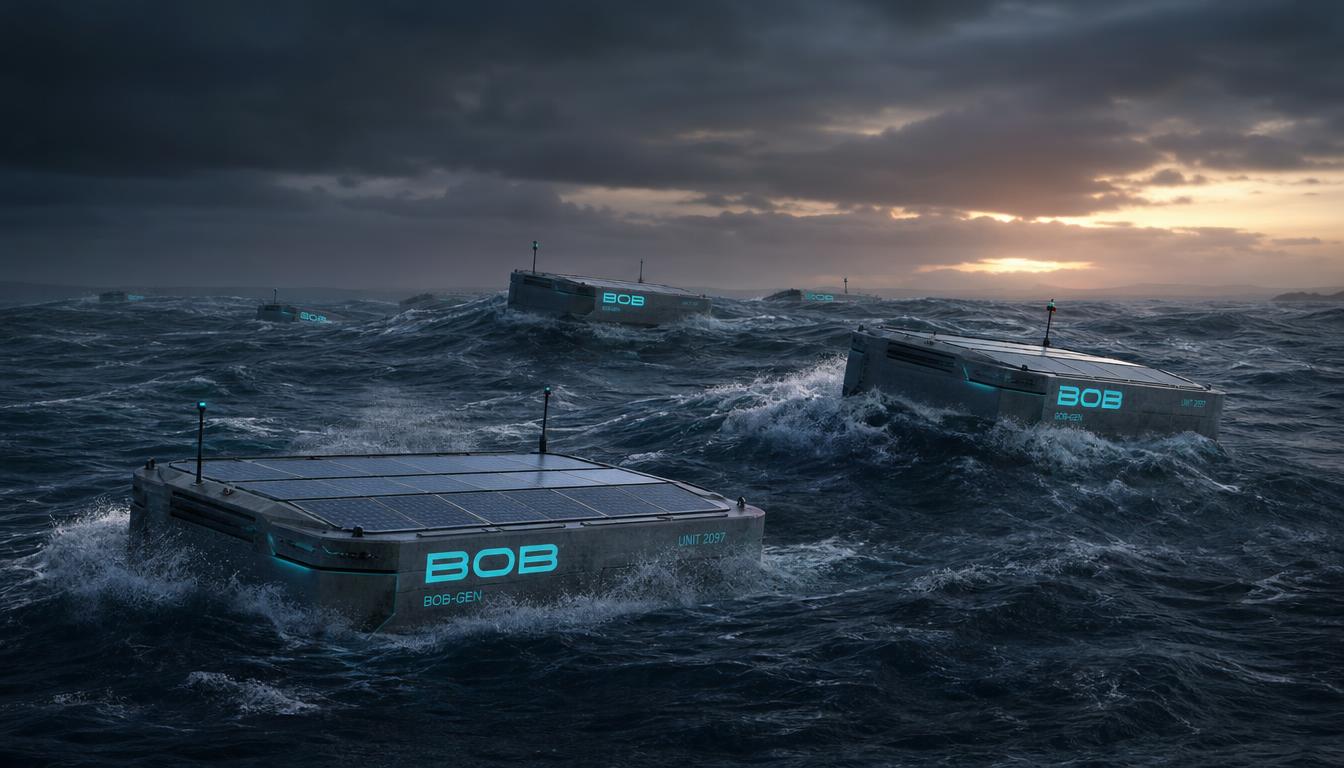
BOB-GEN vessels riding heavy swell in a storm at dusk

Execution Team

Built by People Who Build Things

Chris Joubert

Chris Joubert

CEO · Inventor · Patent Holder

Commercial diver, rigging supervisor and energy-storage innovator. Deployment lead with deep domain expertise in marine operations. Holds the core patents.

Founder

Alex Wheeler

Alex Wheeler

CTO · Technical Lead

Apocalypse (Cape Town). 20+ years bespoke fabrication. SAISC Steel Awards 2013 winner. Built SAMSA-approved 70 m LOA barge. IMDB credits include Dredd, Maze Runner, Bloodshot. Led Discovery Channel Harley replica fleet.

Co-Founder

Independent sign-offs built into tranche gating: naval/marine architect, structural/concrete engineer, electrical engineer, SA Ports Authority, marine engineers. Investor may nominate or approve the verifying engineer.

Transparency

Key Prototype Risks

BINARY
Technology fails to achieve 66 % RTE
Mitigated by two independent engineering validations and locked top-discharge configuration. Failure → redesign before further capital.
HIGH
Measurement integrity
End-to-end calibrated meters (not inverter-only). Investor-approved verifier. Raw data retained.
MEDIUM
Cost overrun / cycle time / margin erosion
Two-tranche gating, quote-based budget, $250 k contingency, fully modelled commercial-phase dynamics disclosed.

Ready to Answer the Binary Question?

We are raising a USD 1,000,000 convertible note to fund the open-water prototype that will prove (or disprove) ≥ 66 % round-trip efficiency.